
Description
What holds communities together—shared values or shared enemies? From the Ottoman frontiers to postwar treaties to the rise of far-right populism, European unity has often been manufactured through elite narratives, symbolic crises, and oppositional identity. In contrast, the Islamic vision of economic unity draws from an internal ethic—tawḥīd, justice, and moral economy—rather than geopolitical fear or material incentive. Can a transnational identity grounded in divine purpose withstand the pressures of global capitalism and the fragmentation of the modern nation-state?
In this colloquium, we welcome Mehreen Khan, Economics Editor at The Times and former EU correspondent at the Financial Times, to reflect on how identity, symbolic capital, and economic imagination shape integration projects—both Western and Ummatic. As the liberal order fractures and multipolar alternatives emerge, this session asks: Can decentralized, bottom-up frameworks rooted in Islamic cultural capital gain legitimacy in a world that privileges elite power and technocratic control?
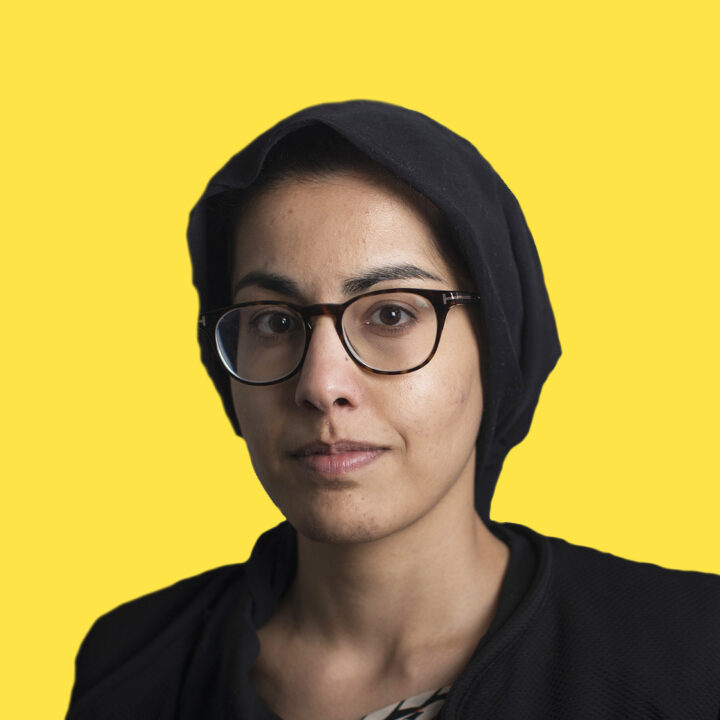
Mehreen Khan is the Economics Editor at The Times (UK) and formerly served as the Brussels Correspondent for the Financial Times, where she covered EU politics, economic governance, and regulatory policy. Her writing explores the intersection of global markets, identity, and political power, with a particular interest in alternative economic imaginaries beyond the Western liberal framework.
Summary
Presentation
Framing the Conversation: Integration, Identity, and the Limits of Power
- Can economic unity among Muslim nations be achieved in a manner different from the European Union’s (EU’s) elite-driven, technocratic integration?
- Comparing the EU’s evolution with the Islamic vision of economic unity raises questions of identity, legitimacy, sovereignty, and values.
- Based not on academic theory but on journalistic experience, particularly six years covering the EU from Brussels, three key themes are proposed:
- The transformation from nation-state to member-state in the EU;
- The extent to which the EU has (or has not) moved beyond market-centric neoliberalism;
- The EU’s exercise of economic sovereignty—its reach, its limits, and what this means for Muslim-majority countries.
From Nation-State to Member-State: Lessons for the Muslim World
- The work of Christopher Bickerton informs the analysis of how EU integration has created a new political entity: the member-state.
- Unlike the nation-state, the member-state defers significant authority to supranational EU bodies like the European Commission and European Parliament.
- This transformation entails:
- A shift in the locus of legitimacy from domestic governments to EU institutions.
- A detachment of national publics from decision-making, creating a “democratic deficit.”
- A technocratic governance model driven by elite consensus rather than popular mandate.
- This shift poses both a caution and an opportunity for Muslims. While nation-states often hinder Islamic unity, the concept of a member-state may offer a more coherent model—if built from the bottom-up and rooted in shared Islamic values, rather than elite fears of mass democracy.
- The EU was constructed in a top-down manner from a place of fear and mistrust in response to the trauma of World War II, thus requiring a thick legal binding. By contrast, a Muslim integration project could build upon an organic sense of ummatic solidarity built around shared values and ethics.
Economic Integration and the Illusion of Moving Beyond the Market
- The EU has not transcended neoliberalism—it is, in fact, one of neoliberalism’s crowning achievements. The EU’s signature economic accomplishment is the creation of the Single Market, which prioritizes the “four freedoms”: free movement of goods, capital, services, and people.
- However, this market unification:
- Primarily serves capital and large corporations.
- Favors economic elites over labor and social welfare.
- Institutionalizes neoliberal norms through “thick law” (treaties, regulations, directives).
- Despite being perceived by some, particularly on the political right, as a progressive “woke” force, the EU’s DNA remains fundamentally market-driven, particularly since its deepening in the 1980s–90s, during the neoliberal turn. The EU has often reinforced rather than mitigated inequality.
Economic Sovereignty: Power, Inequality, and External Constraint
- The EU exercises economic sovereignty both internally and externally, often in asymmetric and unaccountable ways.
- Internally, the Eurozone exemplifies structural inequality:
- Rich “creditor” nations (e.g., Germany, the Netherlands) dominate poorer “debtor” nations (e.g., Greece, Italy).
- Bailouts during the Eurozone crisis were accompanied by austerity measures that devastated weaker economies.
- A common currency (the euro) without a common fiscal policy creates imbalance and dependency.
- Externally, the EU projects power via:
- The Brussels Effect: global companies and countries conforming to EU regulations and values for access to its market.
- Normative power: tying trade access to compliance with EU values (e.g., environmental standards, digital privacy).
- Trade imperialism: punishing poorer countries (e.g., Malaysia and Indonesia’s palm oil sectors) under the guise of environmentalism.
- Many Muslim countries are on the receiving end of this asymmetry yet lack the leverage or institutional unity to resist it.
The Limits of Economic Sovereignty
- Even the EU’s power has limits:
- The EU is the third largest economy in the world after the U.S. and China.
- It remains subordinate to the U.S. in global finance due to the dollar-dominated system, and then to China because of the latter’s advanced manufacturing.
- EU foreign policy, including sanctions and military alignment, often mirrors U.S. interests.
- Examples: The EU could not uphold its Iran nuclear commitments post-Trump withdrawal due to U.S. dollar hegemony; currently, the EU holds little leverage in U.S.-EU trade and tariff negotiations.
Summary: Points of Departure and Optimism for the Muslim World
- The EU offers important cautionary lessons rather than a blueprint. Muslims should not mimic its elite-driven technocratic structures but rather:
- Build institutions grounded in Islamic values and bottom-up legitimacy, avoiding the EU’s disconnect between people and policies.
- Use shared ethical frameworks, not just legal or market ones, to bind states together—it is hard to envisage the EU’s neoliberalism ever changing.
- Avoid recreating the EU’s economic disparities, democratic deficits, and asymmetries between constituent members.
- Muslim states may be reconceptualized as Muslim member-states, not as replicas of Western political units but as distinct, ethically grounded participants in a new form of economic unity.
Discussion
Gaza and the Crisis of Legitimacy in the EU and Muslim States
- 2003 represented a moment when two EU member-states—France and Germany—asserted autonomy in standing against U.S. and UK policy in the Iraq War.
- Recent EU policy toward both Gaza and the U.S. and Israeli targeting of Iran demonstrate that that autonomy has been curtailed, even against European public opinion.
- Part of this is shaped by the internal European culture war—specifically the hostile stance taken by several EU member-states toward their own Muslim populations.
- The ongoing genocide in Gaza has deepened mistrust between Muslim populations and their political elites. Gaza has become the “neuralgic issue” revealing:
- The impotence of the Organization of Islamic Cooperation (OIC).
- The gap between the sentiments of the Muslim public and the policies of their governments.
- The failure of Muslim elites to even match Western rhetorical standards, let alone take substantive action.
- This mirrors the EU’s own problems of legitimacy, but for Muslims, the betrayal is more visceral and existential. It underscores the urgency for alternative political and economic frameworks rooted in popular legitimacy and ethical responsibility.
Imagining the First Steps Toward Muslim Economic Unity
- Like the EU’s early European Coal and Steel Community (ECSC), Muslim countries could begin with pragmatic, limited economic cooperation—particularly around commodities and energy:
- Resource-rich Muslim countries (e.g., Qatar, Saudi Arabia) should offer preferential terms to poorer Muslim countries.
- Favorable trade in essentials (e.g., Liquefied Natural Gas (LNG), food, electricity) can alleviate economic pain points in countries like Pakistan.
- Such arrangements should be guided by Islamic values of equity and solidarity—not just profit.
- EU nations weaponize their values, favoring other nations that share them, thus wielding normative power to shape other nations in their image.
- Muslim countries should adopt Most Favored Nation (MFN) designations among one another, legally permissible under WTO rules, and already practiced selectively by Western blocs.
Confronting Structural Asymmetry and External Dependence
- Economic disparities among Muslim countries are often greater than those in the EU.
- Some are commodity exporters; others are deeply dependent importers.
- Some have young populations and demographic advantages (e.g., Pakistan, Nigeria), while others are resource-rich but demographically constrained.
- To address this, Muslim countries must:
- Develop equitable intra-Muslim economic frameworks.
- Counter brain drain and dependency by building regional economic blocs.
- Avoid mimicking the Eurozone’s flawed monetary integration, which lacked true convergence.
China’s Role: A Mixed Blessing
- While China is seen by some as an alternative patron for Muslim countries, some nuance is required:
- China’s Belt and Road Initiative (BRI) has supported infrastructure in Muslim-majority countries.
- Yet China has remained silent on Gaza and has shown no interest in ethical foreign policy.
- Chinese military and economic aid often lack transparency and come with strings attached.
- Thus, trading Western hegemony for Chinese tutelage without clear values-based terms is to be cautioned against.
Opportunities and Threats of Emergent Multipolarity
- The emergence of BRICS and recent developments in U.S. trade policy have thrown the inescapability of the dollar system into question.
- However, BRICS nations have little shared interest, reserve currencies cannot be fabricated out of thin air, and reserve currencies come with responsibilities that few countries would be willing to take on.
- More important than BRICS has been the reversion to states protecting themselves by purchasing gold for protection, as well as the emergence of cryptocurrency stablecoins.
Sub-Saharan Africa
- The contrast between the economy of a state like Niger and one like Saudi Arabia is huge.
- Such states are most in need of development assistance.
- States like China and Turkey have become involved in such development, but nothing would stop other Muslim countries from becoming similarly involved.
The EU and NATO
- The post-WWII development of Europe and the EU, as an economic bloc, took place in the shadow of U.S. military hegemony, reflected in NATO.
- With the gradual withdrawal of U.S. military support from Europe, the EU is more likely to focus on strengthening ties between existing member states rather than welcoming new members.
Technological Innovation and the Economy
- The U.S. is far ahead of the EU in terms of technological innovation—the combined market capitalization of major U.S. tech companies is bigger than European economies.
- China has forged major innovations precisely as a result of being technologically disadvantaged and sanctioned by the U.S., lowering the barrier to entry and making such technologies accessible for everyone.
- Muslim nations can benefit from such innovations, particularly cryptocurrencies and blockchain technologies.

Mehreen Khan
Mehreen Khan is the Economics Editor at The Times (UK) and formerly served as the Brussels Correspondent for the Financial Times, where she covered EU politics, economic governance, and regulatory policy. Her writing explores the intersection of global markets, identity, and political power, with a particular interest in alternative economic imaginaries beyond the Western liberal framework.