


Ummatics Colloquium | Gaza: The Umma Beyond The Crisis
The current conflict in Gaza has demonstrated that Muslim Ummatic sentiments are alive and vibrant. Muslims from around the world, including those residing in non-Muslim majority countries, have taken to the streets to support their fellow Muslims in Palestine . They have been pressuring their local politicians to take action, collecting donations, and above all, making continuous supplications to Allah to alleviate such calamity. Nonetheless, other recent crises in the Muslim world have shown that such Ummatic sentiment tends to wane after some time, and Muslims return to being more concerned about their localized national interests. What would the future world look like if Muslims were to act as one Ummah?
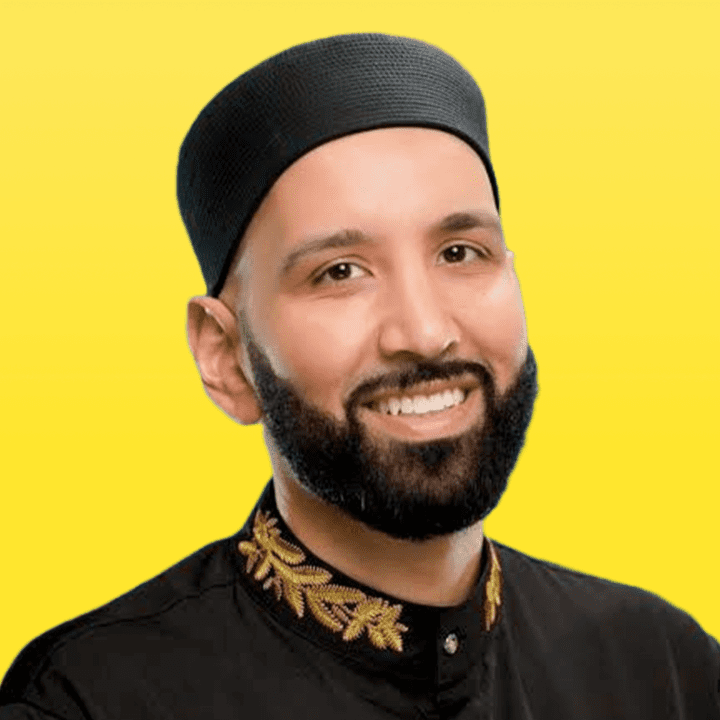
The Ummatics Colloquium is honored to host Imam Omar Suleiman and Wadah Khanfar to discuss the status of the Ummatic solidarity during and beyond the crisis in Gaza , and the potential this Umma has in changing future political realities.
Imam Omar Suleiman is a world-renowned scholar and theologically driven activist for human rights. He is the Founder and President of the Yaqeen Institute for Islamic Research, and an Adjunct Professor of Islamic Studies in the Graduate Liberal Studies Program at SMU (Southern Methodist University).
Wadah Khanfar is the Former Director-General of the Al Jazeera Network, President and co-founder of Al Sharq Forum , and Chairman of Common Action Forum.
The discussion and Q&A session was moderated by Dr. Ovamir Anjum, Founder of the Ummatics Institute.
This discussion is part of the Ummatics monthly colloquium; subscribe to our newsletter to receive notifications for upcoming events: https://bit.ly/Ummatics-Colloquium-Si…
__________
The Ummatics Institute is a research organization for the study of ummatic thought and practice. We aim to empower Muslims toward the realization of a unified Islamic civilization for the benefit of the Umma and humanity at large. Our institute provides a platform for the thinkers, doers, and visionaries of the Umma to conceptualize and help realize the reintegration of Muslim regions into a prosperous and virtuous civilization.
Colloquium Summary
Main Presentations
Ust. Wadah Khanfar
The Century of Humiliation and the Loss of the Umma
- The last century, from roughly 1920 to today, can be called a “century of humiliation” that the Umma has gone through, paralleling China’s 19th-century experience of invasion, division, and subjugation by international powers.
- The Umma is not merely a spiritual or brotherly concept; it is fundamentally a geopolitical one, an institutionalized framework that created a political center of gravity, giving the Muslim world cohesion, self-protective power, and a shared identity that transcended all territorial boundaries.
- During Islam’s Golden Age, even amid diverse sultanates or emirates, the unifying concept of the Umma—the global Muslim community—prevailed politically. This made every Muslim a “citizen” of the Umma, transcending local rulers or territories.
- Ibn Battuta’s ability in the 13th century to serve as judge, ambassador, and governor across the entire Islamic world without anyone questioning which land or ruler he belonged to illustrates the depth and uniqueness of this concept. No other civilization has produced anything comparable.
- A second devastating loss, alongside political fragmentation, was the loss of continuity of knowledge. The Umma was the world’s generator of values and learning, with scholarship belonging to everyone regardless of a scholar’s ethnicity or origin. Whether a thinker was Persian or Arab was entirely irrelevant, as the knowledge was the Umma’s collective inheritance.
- The imposition of the nation-state model dismantled both pillars. Post-colonial “states” in the Muslim world are not nation states in any meaningful Westphalian sense; they are an alien architecture designed to fragment rather than to build.
- The failure of Muslim political leadership to respond meaningfully to Gaza is therefore not surprising; it is the predictable outcome of this architecture. Muslim leaders met in Saudi Arabia, resolved to take severe action, established a follow-up committee of seven countries—and that committee never met.
The Case for Global Alliance and a New Value System
- The international order is built on power, not morality. Liberal values are invoked selectively to serve Western interests and abandoned the moment they conflict with those interests.
- The Muslim world is the latest, and not the only, victim of Western power. Africa lost tens of millions to slavery and colonialism; the Congo lost ten million to Belgian colonialism alone; Latin America, indigenous peoples in Australia and New Zealand all suffered comparable crimes. What is happening in Gaza is entirely consistent with this heritage.
- Building alliances with the Global South, all those who have suffered under Western-centric world order, including justice-seeking peoples everywhere, and dissenting Jews who recognize the danger of the current path is not optional but essential for any meaningful shift in the world order.
- The growing schism between Muslim ruling elites and their populations is dangerous and accelerating. Left unmanaged, this gap generates extremism; channeled properly through intellectual effort, it can become a genuine revolution in political consciousness.
- A new value system rooted in Islamic thought, which is futuristic, must replace the Western-centric frameworks dominating Muslim universities, political thinking, and economics.
- Gaza is not simply a crisis to be resolved but the opening of a transformation delayed by a full century. The Prophet ﷺ himself experienced siege, hunger, and apparent defeat—and within ten years produced the greatest geopolitical transformation in human history, replacing two world empires with an entirely new civilization.
Dr. Omar Suleiman
The Prophetic Framework: Solidarity, Clarity, and Leadership
- The Prophet ﷺ never simply replaced old structures with new slogans. He refined what was good in existing forms of human fraternity including tribal solidarity and elevated those forms toward something universal, filtering out the destructive excess.
- The Prophet ﷺ used tribal names to make dua for tribes, calling them toward the best their names could signify, and corrected their slogans: where “support your brother whether he is oppressor or oppressed” once meant unconditional tribal loyalty, it became “support him when he oppresses by stopping him from oppressing.”
- Three things always collapse together and must be rebuilt together: ummatic solidarity, prophetic clarity, and legitimate leadership. The loss of any one of them pulls the others down.
- Nationalism is the new tribalism. Pre-Islamic tribal loyalty led people to support oppressors unconditionally; national loyalty today produces the same distortion. Prophetic aḥādīth warn that some from the Umma will follow disbelievers to the point of returning to idol worship—the predictable endpoint of replacing ummatic consciousness with tribal or national fraternity and surrendering to false leadership.
- Against this, the Prophet ﷺ promised that a group from the Umma will always remain steadfast upon the truth, unharmed by betrayal from political elites, until the command of Allah comes and companions identified these people with the people of the holy land and its surroundings.
- The people of Gaza are manifesting this steadfastness today, drawing non-Muslims to Islam and reminding Muslims of what cause, clarity, and unity look like when rooted in something greater than political calculation. There is no excuse for an Umma to succumb to failed structures when such an example stands before us.
Discussion
The Prophetic Model as an Alternative to Western Realism
- WK: The current world order is anarchic in the Western philosophical sense: power, not ethics, governs it. This is not the natural condition of international relations but the product of 300 years of Western dominance that interrupted a far longer and richer tradition of political thought.
- WK: The Prophet’s ﷺ political conduct was also deeply realistic. He understood the balance of power and navigated it masterfully, but his “realism” was oriented toward a transcendent purpose: drawing people closer to Allah, not centralizing wealth or imposing hegemony.
- OS: The values embedded in every prophetic agreement and structure can always be extracted to build more timely structures in the spirit of those values; they are not so ambiguous that they can be manipulated, as the Abraham Accords were—no elementary understanding of the religion could ground anything the Prophet ﷺ did in something like those Accords.
- OS: The Prophet ﷺ rejected the Makkan offer to worship their gods one day in exchange for their worship of Allah every other day—not because the power calculation was unfavourable, but because the model had to be eternal and timeless, not merely tactically convenient.
- WK: Al-Hudaybiyyah illustrates this most powerfully. With 1,400 companions capable of taking a weakened Mecca, the Prophet ﷺ chose instead to approach Quraysh gently, signing a treaty on seemingly unfavorable terms. Allah described it as the clearest of victories because the strategy of the strong approaching the weak with mercy, not domination, is what truly transforms world orders.
- WK: Islamic values of justice, equality, and freedom resemble liberal values on the surface but differ entirely at the ontological level. Islamic values are grounded in divine accountability and sincere worship; liberal values have been converted into instruments of state power—utility without higher purpose.
Gradualism, the Nation State, and Pathways to Reintegration
- WK: One hundred years of the post-colonial nation-state model is sufficient to prove that this architecture has failed. Anarchy now pervades most countries living under it, and no meaningful prosperity, stability, or sovereignty has emerged from it.
- WK: Gradual transition toward ummatic reintegration is nonetheless necessary, beginning at the regional level with economic integration—the Sahel, the Arab world, Central Asia. Economic integration generates new psychologies of identity, governance, and collective interest that gradually build the practical reality of the Umma.
- WK: Europeans invented the nation-state, suffered two millennia of fratricidal warfare as a result, and ultimately moved toward collective integration in the European Union. Muslims, who already possess the civilizational precedent of the Umma, have far stronger foundations for this project, yet treat the alien nation-state model as sacred.
- WK: The coming confrontation between the United States and China will create fractures in the existing world order. When dominant orders crack, the marginalized gain room to imagine and build alternatives. This window must be prepared for now, intellectually and institutionally.
- OS: Daʿwah must lead the way alongside economic integration, because there is no way to bring people closer to Allah without diminishing the importance of all individual and collective structures that do not emanate from that closeness. People elevated in Islamic consciousness are naturally drawn toward ummatic thinking.
- OS: The risk of reinforcing the nation-state model while trying to strengthen Muslim nations is real but can be mitigated so long as clarity of values is maintained and the elements of nation-state thinking most antithetical to Islam are actively condemned rather than quietly accepted.
- WK: Technology enables the building of a virtual Umma now, without waiting for political conditions to change. Networks connecting economists, politicians, scholars, and daʿwah workers across professional and national lines can maintain intellectual momentum against political elites who have jails, media, and security apparatus on their side.
- Moderator (Ovamir Anjum): This cross-border intellectual work can be termed “discursive integration”—made possible by decades of globalisation and digital technology, just as the steamboat engine once enabled more Muslims to perform Hajj, generating a new ummatic consciousness across the late 19th and early 20th centuries.
Arab Nationalism, the Umma, and the Question of Language
- WK: Arab nationalism failed even on its own terms, producing bitter divisions among states sharing identical slogans—Ba’athism in Iraq against Ba’athism in Syria, the collapsed union of Egypt and Syria under Nasser. It is a deviation from the Arabs’ actual mission, which is to carry a universal message to the world, not to build an ethnic empire.
- WK: Arabic as a shared bond is legitimate, but ethnic Arab nationalism immediately risks excluding the Amazigh, Kurds, Africans in Sudan, and others who are integral to the Muslim world. The Prophet ﷺ defined “Arab” linguistically, not by bloodline, and the Arab phenotype is itself the most diverse in the world precisely because it sits at the crossroads of three continents.
- OS: The Prophetic method was to use any shared culture, language, or lineage to establish a bond of common humanity, and then build upon it to call toward something higher without ever allowing the shared thing itself to become the higher calling.
- WK: The Constitution of Medina defined the Umma to include non-Muslims living within its framework of justice and mutual security. The Umma is therefore a civilizational concept capable of accommodating genuine pluralism, not a narrow religious club.
Liberal Values and Their Islamic Roots
- WK: Early Enlightenment liberal values like justice, equality, individual dignity were substantially inspired by Islamic thought, transmitted through centuries of contact via the Crusades, Andalusia, and Mediterranean trade routes. The West then severed these values from their origin and converted them into instruments of state power.
- WK: Rather than Islamicising liberal values, the better path is to recover their Islamic roots and reconnect them to their proper grounding in divine purpose and sincere accountability, stripping away the utilitarian function they have come to serve for the powerful.
- OS: Gaza has created an unexpected intellectual opportunity. By making Muslims clearly “unacceptable” to mainstream global frameworks, it may liberate Islamic intellectual development from the pressure to validate itself against Western standards, making that development purer and closer to its true origin.

Dr. Omar Suleiman
Imam Dr. Omar Suleiman is the Founder and President of the Yaqeen Institute for Islamic Research, and an Adjunct Professor of Islamic Studies in the Graduate Liberal Studies Program at SMU (Southern Methodist University). He is also the Resident Scholar at Valley Ranch Islamic Center and Co-Chair Emeritus of Faith Forward Dallas at Thanks-Giving Square.

Wadah Khanfar
Wadah Khanfar is the co-founder of the Sharq Forum and the ex-Director General of Al Jazeera. He began his career with Al Jazeera in 1997, covering significant events in South Africa, Afghanistan, and Iraq. In 2006, he became Director General, overseeing the network’s expansion into a global media organization. Khanfar stepped down in 2011 after the Arab Awakening. He has been recognized by "Foreign Policy" as one of the Top 100 Global Thinkers and by "Fast Company" as one of the Most Creative People in Business. Khanfar holds postgraduate degrees in Philosophy, African Studies, and International Politics.